pinkaku 組織病理学研究所

現場から生まれた「社腸」という組織論で、会社の詰まりを言語化する

研究所トップ社腸とは社腸™診断症例図鑑

組 織 の 詰 ま り を
可視化する組織論

― 社腸(Organizational Pathology)

  • あなたの会社はどの社腸?承認待ち 社腸™診断

    あなたの会社はどの社腸?承認待ち 社腸™診断

    【社腸™診断】


    仕事は終わっている

    しかし

    進まない

    そんなこと

    ありませんか?

    ・承認待ちです

    ・上司確認中です

    ・決裁待ちです

    現場は動ける

    しかし

    判断だけが止まっている

    その結果

    組織全体の流れが遅くなる


    診断(YES / NOでチェック)

    以下の質問に直感で答えてください👇

    • 承認待ちで仕事が止まることが多い
    • 上司の返答待ちが発生する
    • 小さな案件でも決裁が必要になる
    • 現場で判断できないことが多い
    • 上司不在時に業務が停滞する
    • 判断できる人が限られている
    • 承認ルートが複雑になっている


    判定

    YESの数を数えてください👇

    • 0〜2個 → 軽度
      (まだ構造は機能している)
    • 3〜5個 → 中度
      (構造が崩れ始めている)
    • 6個以上 → 重度
      (構造が機能していない状態)


    診断結果

    👉 あなたの会社は

    「上司型社腸™」

    の可能性が高いです。


    解説

    この状態では

    仕事量ではなく

    判断権限がボトルネックになっています

    本来

    意思決定は適切に分散されることで

    組織は流れ続けます

    しかし

    承認が一部に集中すると

    現場は待機状態になります

    承認待ちが増えるほど

    組織全体の流れは遅くなります


    ▶️ 上司型社腸の詳しい症状はこちら

    ▶️他の社腸タイプも見る


    👇 迷ったら、ここに戻ってきてや✨
    🏰 このブログの全体像(要塞)はこちら


    📚 pinkaku 組織病理学研究所

    社腸(Organizational Pathology)は
    現場から生まれた「会社の詰まり」を言語化する組織論です。

    研究所トップはこちら
    https://pinkaku.com/lab/

  • Case 46: When Systems Adapt to Evaluation Instead of Reality

    Case 46: When Systems Adapt to Evaluation Instead of Reality

    Concept Inversion

    Adaptation is assumed to improve performance.

    It does not.

    Adaptation to evaluation criteria can detach a system from reality.


    Structural Decomposition

    Systems are exposed to external evaluation.

    They begin to adapt.

    Behavior changes.
    Output changes.
    Priorities shift.

    However, adaptation is directed toward evaluation metrics, not actual conditions.

    Reality remains unchanged.

    The system becomes optimized for being judged, not for functioning.


    Pathology Progression

    Evaluation pressure increases.

    The system adapts.

    Performance indicators improve.

    Real conditions stagnate.

    Mismatch grows.

    The system becomes dependent on evaluation signals.

    Reality is no longer the reference point.


    Cold Diagnosis

    An organization that adapts to evaluation systems instead of real conditions loses functional integrity.

    It performs well in metrics but poorly in reality.


    Structural Definition

    This case defines a condition where systems adapt to external evaluation criteria rather than actual operational reality.

    One-Line Summary

    This case describes how adaptation to evaluation systems detaches performance from reality.


    Explore the full case index

    This article is part of the Organizational Pathology case archive.
    All published cases can be found here:

    Organizational Pathology — Case Index

  • Case 45: When Structurally Valuable Outputs Become Economically Invisible

    Case 45: When Structurally Valuable Outputs Become Economically Invisible

    Concept Inversion

    Value is assumed to generate revenue.

    It does not.

    Structural value and economic visibility are not the same.


    Structural Decomposition

    An output can possess high structural value.

    It is coherent.
    It is consistent.
    It accumulates meaning over time.

    However, economic systems evaluate differently.

    They prioritize scalability.
    They favor immediacy.
    They require compatibility with monetization frameworks.

    Structural value is often slow.
    Economic systems are optimized for speed.

    This misalignment prevents conversion.

    Value exists.
    Revenue does not.


    Pathology Progression

    A system produces high-quality output.

    Recognition grows gradually.

    Search systems index it.

    Human audiences acknowledge it.

    Monetization is attempted.

    Economic systems fail to convert it.

    Revenue remains low or absent.

    The system questions its own value.


    Cold Diagnosis

    An organization that equates economic visibility with value fails to recognize structurally valuable outputs.

    It risks abandoning long-term assets due to short-term economic invisibility.


    Structural Definition

    This case defines a condition where outputs with high structural value remain economically invisible due to misalignment with monetization systems.

    One-Line Summary

    This case describes how structurally valuable outputs fail to generate revenue when economic systems prioritize incompatible attributes.


    Explore the full case index

    This article is part of the Organizational Pathology case archive.
    All published cases can be found here:

    Organizational Pathology — Case Index

  • 📅金曜定例社腸会議|情報共有してるのに、誰も知らへん会社

    📅金曜定例社腸会議|情報共有してるのに、誰も知らへん会社

    【腸活食生活書籍化Prj📘】

      自分の会社🏢ヤバいかも?
      どの社腸か、覗いてみる👇
      🔗 社腸 症例図鑑


    メールした。

    チャットも送った。

    朝礼でも言うた。

    掲示板にも貼った。

    なのに

    誰も知らへん。

    そんな会社

    意外と多い。


    社腸シリーズのまとめはこちら


    情報量と伝達量は違う

    情報を増やせば

    伝わる訳やない。

    むしろ逆や。

    多すぎる情報は

    大事な情報まで

    埋もれさせる。


    誰も悪くない

    送った人は

    「伝えた」

    と思っとる。

    受け取る側は

    「知らんかった」

    と言う。

    どっちも本当や。

    問題は

    途中で流れが止まったことや。


    情報は整理されて初めて届く

    情報には

    優先順位がいる。

    • 今すぐ必要
    • 今週必要
    • 参考情報

    全部同じ重さで流したら

    何も残らへん。


    何が起きるのか

    この状態では

    • 同じ連絡を繰り返す
    • 確認作業が増える
    • 誰も責任を持たへん
    • 判断が遅れる

    結果として

    情報共有してるようで

    誰も共有できてへん会社

    になる。


    最後に

    情報共有とは

    送ることやない。

    必要な人へ

    必要なタイミングで

    届くことや。

    量より

    流れ。

    そこが組織を変える。


    ▶️ この症例は『社腸症例図鑑』の
    会議型社腸 に該当します。


    👉 関連症例

    ▶️ 情報が流れない会社は動かない
    ▶️ 責任が回る会社は、もう壊れている


    👇 迷ったら、ここに戻ってきてや✨
    🏰 このブログの全体像(要塞)はこちら

  • あなたの会社はどの社腸?持ち帰り会議 社腸™診断

    あなたの会社はどの社腸?持ち帰り会議 社腸™診断

    【社腸™診断】


    会議は終わった

    しかし

    何も決まっていない

    そんなこと

    ありませんか?

    ・持ち帰ります

    ・検討します

    ・一旦確認します

    会議では結論が出ず

    判断だけが先送りされる

    その結果

    現場は待機状態になる


    診断(YES / NOでチェック)

    以下の質問に直感で答えてください👇

    • 会議で結論が出ないことが多い
    • 「持ち帰り」が頻繁に発生する
    • 同じ議題が何度も出てくる
    • 会議後に現場が動けない
    • 誰が決めるのか曖昧なまま終わる
    • 判断より共有が目的になっている
    • 会議時間の割に進展が少ない


    判定

    YESの数を数えてください👇

    • 0〜2個 → 軽度
      (まだ構造は機能している)
    • 3〜5個 → 中度
      (構造が崩れ始めている)
    • 6個以上 → 重度
      (構造が機能していない状態)


    診断結果

    👉 あなたの会社は

    「会議型社腸™」

    の可能性が高いです。


    解説

    この状態では

    会議が意思決定の場ではなく

    判断延期の場になっています

    本来

    会議は流れを前に進めるために存在します

    しかし

    判断が持ち帰られることで

    組織全体が待機状態になります

    会議が増えるほど

    流れは遅くなっていきます


    ▶️ 会議型社腸の詳しい症状はこちら

    ▶️他の社腸タイプも見る


    👇 迷ったら、ここに戻ってきてや✨
    🏰 このブログの全体像(要塞)はこちら


    📚 pinkaku 組織病理学研究所

    社腸(Organizational Pathology)は
    現場から生まれた「会社の詰まり」を言語化する組織論です。

    研究所トップはこちら
    https://pinkaku.com/lab/
  • Case 44: When Systems Optimize for Incompatible Metrics

    Case 44: When Systems Optimize for Incompatible Metrics

    Concept Inversion

    Optimization is assumed to improve outcomes.

    It does not.

    Optimization improves alignment with a metric, not necessarily with value.


    Structural Decomposition

    Multiple systems evaluate the same output using different metrics.

    Search systems prioritize relevance and structure.
    Social systems amplify engagement signals.
    Monetization systems enforce compliance and advertiser safety.

    Each system optimizes for its own objective.

    Metrics are not shared.
    Objectives are not aligned.
    Trade-offs are not resolved.

    Improvement in one metric can degrade performance in another.

    Optimization becomes fragmentation.


    Pathology Progression

    A system selects a primary metric.

    Optimization begins.

    Performance improves in that metric.

    Other systems react negatively.

    Visibility changes.
    Engagement shifts.
    Monetization declines.

    Further optimization is applied.

    Conflicts intensify.

    The system loses coherence.


    Cold Diagnosis

    An organization that optimizes for multiple incompatible metrics without hierarchy or integration cannot stabilize its performance.

    It fragments its own structure.


    Structural Definition

    This case defines a condition where multiple systems optimize for incompatible metrics, resulting in structural fragmentation.

    One-Line Summary

    This case describes how optimization across conflicting metrics fragments system performance instead of improving it.


    Explore the full case index

    This article is part of the Organizational Pathology case archive.
    All published cases can be found here:

    Organizational Pathology — Case Index

  • Case 43: When Human Evaluation and Algorithmic Evaluation Diverge

    Case 43: When Human Evaluation and Algorithmic Evaluation Diverge

    Concept Inversion

    Evaluation is assumed to be consistent across systems.

    It is not.

    Human judgment and algorithmic judgment follow different logics.


    Structural Decomposition

    The same output is presented to human audiences and algorithmic systems.

    Humans respond to meaning, context, and perceived insight.
    They interpret nuance.
    They assign value based on relevance and experience.

    Algorithmic systems evaluate differently.

    They rely on predefined rules.
    They detect patterns.
    They filter based on risk, compliance, and measurable signals.

    These evaluation logics do not align.

    Human recognition does not translate into algorithmic acceptance.

    Algorithmic rejection does not invalidate human value.


    Pathology Progression

    Content is produced.

    Humans engage.

    Feedback is positive.

    Algorithmic systems evaluate.

    Rejection occurs.

    The creator attempts adjustment.

    Human response declines.

    Algorithmic acceptance remains unchanged.

    Optimization fails across both systems.


    Cold Diagnosis

    An organization that attempts to satisfy human and algorithmic evaluation simultaneously without distinction loses alignment in both.

    It confuses interpretive value with measurable criteria.


    Structural Definition

    This case defines a divergence where human evaluation and algorithmic evaluation apply fundamentally different logics to the same output.

    One-Line Summary

    This case describes how human recognition and algorithmic acceptance diverge due to incompatible evaluation logic.


    Explore the full case index

    This article is part of the Organizational Pathology case archive.
    All published cases can be found here:

    Organizational Pathology — Case Index

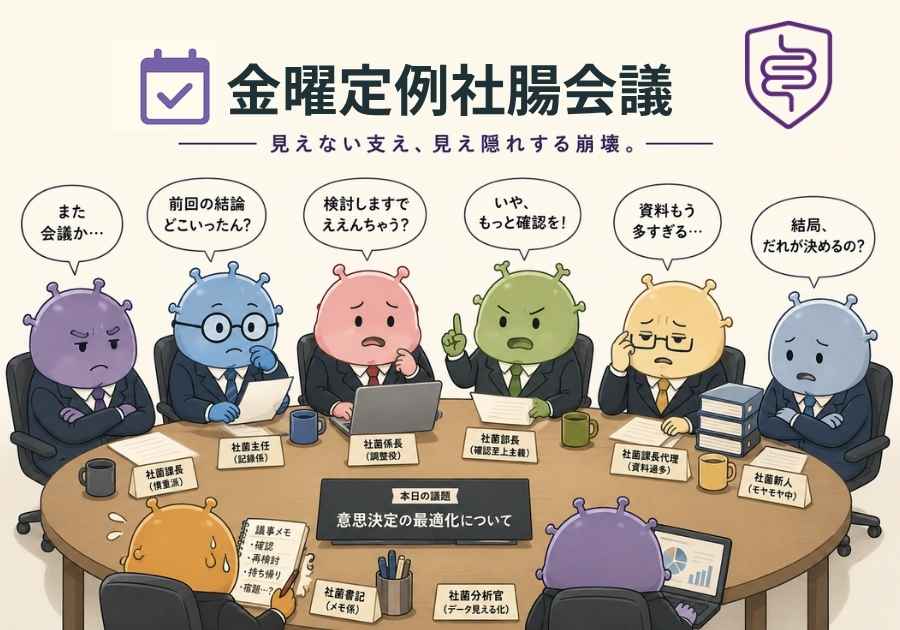
  • 📅金曜定例社腸会議|朝礼がある会社ほど、情報は止まる

    📅金曜定例社腸会議|朝礼がある会社ほど、情報は止まる

    【腸活食生活書籍化Prj📘】

      自分の会社🏢ヤバいかも?
      どの社腸か、覗いてみる👇
      🔗 社腸 症例図鑑


    毎朝集まる。

    連絡事項も伝える。

    共有もしてる。

    でも

    現場では

    「聞いてへん」

    が起きる。

    朝礼してるのに

    なぜ情報は止まるんやろ。


    社腸シリーズのまとめはこちら


    朝礼は情報伝達ちゃう

    朝礼は

    情報を ” 話す ” 場や。

    でも

    情報が ” 届く” 場とは限らへん。

    会社では

    話したことが

    伝わったこと

    になりがちや。

    そこが落とし穴や。


    情報が止まる理由

    情報は

    流れて初めて意味がある。

    でも

    • 一方通行
    • 確認しない
    • 現場で共有されない
    • 行動に変わらない

    これでは

    途中で止まる。

    情報は

    伝えた瞬間ではなく

    使われた瞬間に

    初めて届いたことになる。


    朝礼だけでは変わらへん

    毎朝話していても

    現場で

    「昨日聞いてません」

    が起きる。

    原因は

    人やない。

    構造や。

    情報が

    最後まで流れる仕組みが

    存在してへん。


    何が起きるのか

    情報が止まると

    • 同じ質問が増える
    • 判断が遅れる
    • ミスが増える
    • 責任が曖昧になる

    結果として

    仕事そのものが

    流れなくなる。


    最後に

    朝礼は

    悪いものやない。

    でも

    朝礼だけでは

    情報は流れへん。

    必要なんは

    話すことやなく

    届く仕組みや。


    ▶️ この症例は『社腸症例図鑑』の
    会議型社腸 に該当します。


    👉 関連症例

    ▶️ 情報が流れない会社は動かない
    ▶️ 空気で決まる会社は、もう壊れ始めている


    👇 迷ったら、ここに戻ってきてや✨
    🏰 このブログの全体像(要塞)はこちら

  • あなたの会社はどの社腸?死菌記録依存型 社腸™診断

    あなたの会社はどの社腸?死菌記録依存型 社腸™診断

    【社腸™診断】


    誰も使っていない

    誰も見ていない

    しかし

    記録だけは残り続ける

    ・昔のチェックシート
    ・使われない管理表
    ・理由不明の確認項目

    削除されないまま

    増え続ける

    その結果

    仕事そのものではなく

    記録を維持する仕事が増えていく

    構造として

    死んだ制度が残り続けている状態です


    診断(YES / NOでチェック)

    以下の質問に直感で答えてください👇

    • 何のためか分からない記録がある
    • 昔から続いているだけの管理項目がある
    • 誰も見ていない帳票が存在する
    • 記録をやめる判断ができない
    • 削除理由より継続理由が重視される
    • 引き継ぎ時に「とりあえず残す」が多い
    • 記録作業が現場負担になっている


    判定

    YESの数を数えてください👇

    • 0〜2個 → 軽度
      (まだ構造は機能している)
    • 3〜5個 → 中度
      (構造が崩れ始めている)
    • 6個以上 → 重度
      (構造が機能していない状態)


    診断結果

    👉 あなたの会社は

    「死菌記録依存型社腸™」の可能性が高いです。


    解説

    この状態では

    記録は改善のためではなく

    維持のために存在しています

    本来

    記録は

    判断や改善に活用されるためのものです

    しかし

    削除責任を避けることで

    不要な記録が残り続けます

    その結果

    ・確認作業が増加する

    ・管理コストが肥大化する

    ・本当に必要な情報が埋もれる

    記録が増えるほど

    組織の流れは重くなっていきます


    ▶️ 死菌記録依存型社腸の詳しい症状はこちら

    ▶️他の社腸タイプも見る


    👇 迷ったら、ここに戻ってきてや✨
    🏰 このブログの全体像(要塞)はこちら


    📚 pinkaku 組織病理学研究所

    社腸(Organizational Pathology)は
    現場から生まれた「会社の詰まり」を言語化する組織論です。

    研究所トップはこちら
    https://pinkaku.com/lab/

  • なぜ“ある国内大手企業”は崩壊したのか?優秀な人から辞める構造崩壊

    なぜ“ある国内大手企業”は崩壊したのか?優秀な人から辞める構造崩壊

    【倒産分析(社腸™)Vol.04】


    「優秀な人から辞める会社」は、本当に偶然なんやろか?

    誰もが知っている国内大手企業。

    高い技術力もあった。
    長い歴史もあった。

    それでも崩れた。

    その過程では

    「優秀な人が次々に辞めていた」

    という話が繰り返し語られている。

    でも、それは本当に
    「本人の都合」だけやったんやろか。


    何が起きていたのか


    公開情報ベースで見ると

    • 事業環境の変化への対応が遅れた
    • 経営方針がたびたび変化した
    • 人材流出が続いた
    • 組織改革が繰り返された

    という流れが確認できる。

    結果として

    • 技術やノウハウの継承が難しくなる
    • 現場の判断力が低下する
    • 組織全体の活力が失われる

    という状態へ進んでいったとされている。


    普通に考えたらおかしい


    でも、普通に考えたらおかしいよな?

    優秀な人ほど

    • 評価されるはず
    • 残ってほしい存在のはず

    それなのに

    優秀な人から辞めていく。

    ここにも構造がある。


    構造的に何が起きていたのか


    構造的に見ると、起きていることはシンプルや。

    評価の歪み

    → 成果より前例が優先される

    すると

    → 挑戦する人ほど評価されにくくなる

    その結果

    → 成長機会を求めて組織を離れる


    役割の歪み


    → 優秀な人に仕事が集中する

    すると

    → 負担だけが増えていく

    その結果

    → 疲弊し、退職につながる


    情報の歪み


    → 改善提案が通らない

    すると

    → 現場は声を上げなくなる

    その結果

    → 問題だけが蓄積していく


    社腸認定


    これは明確や。

    主症例:慢性善玉菌流出型社腸

    併発:空洞化型社腸/定着不全型社腸

    優秀な人材を保持できず
    判断力も組織の循環も失われている状態。


    これ、他人事ちゃうで?

    • 「頑張る人ほど損をしていないか?」
    • 「改善を提案する人ほど疲れていないか?」
    • 「辞めた理由を本人の問題で終わらせていないか?」

    その積み重ねが

    静かに組織の力を奪っていく。

    崩壊は突然じゃない。

    構造として準備されていた。


    ▶️ 社腸診断はこちら

    ▶️ 症例図鑑で他のパターンも確認


    前回の倒産分析

    Vol.03はこちら


    👇 迷ったら、ここに戻ってきてや✨
    🏰 このブログの全体像(要塞)はこちら


    📚 pinkaku 組織病理学研究所

    社腸(Organizational Pathology)は
    現場から生まれた「会社の詰まり」を言語化する組織論です。

    研究所トップはこちら
    https://pinkaku.com/lab/

pinkaku 組織病理学研究所

Organizational Pathology Research

 © pinkaku lab/ pinkaku.com

 Twenty Twenty-Five
 Designed with WordPress